~/projects/sound-source-systems/meh-210-v1 · 2024–2025
[SSS] MEH-210-v1
A multiple entry horn loudspeaker: two 10″ woofers and a 1″ compression driver share one horn, so the box plays as a single source. 75° × 45° coverage, 120 Hz – 18 kHz.
MEH-210-v1 is a Sound Source Systems design: I designed it at the company as a custom speaker for a boat venue in Berlin, built around what that room asked for. It was designed from December 2024 to February 2025, then built and installed by May 2025.
It wasn't designed alone. While I worked on these tops, Alessandro, another member of Sound Source Systems, was designing the TH-15 subwoofer for the same boat, and the two grew up side by side: we kept bouncing ideas off each other, trading what each of us learned along the way, until the tops and the TH-15 fit together as one system.
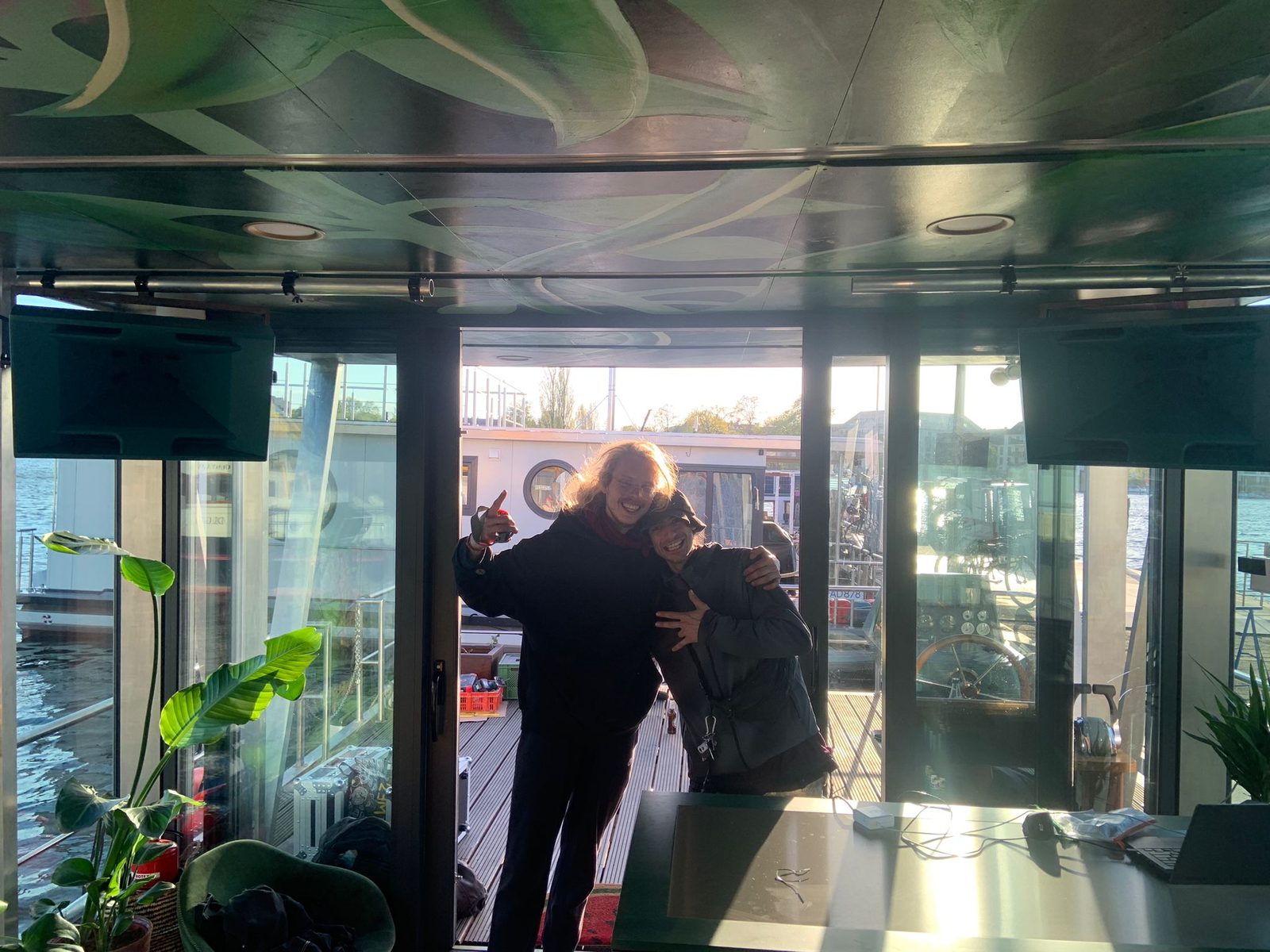
The room
The room on the boat is small: an elongated rectangle with a low ceiling. Two cabinets hang from the ceiling in the corners at one end, as far out of the way as possible, and the coverage follows from that. 45° vertically keeps the sound off the low ceiling and cuts down the reflections; 75° horizontally spreads it across as much of the room as possible. The pair runs in stereo, each cabinet on a custom hanger bracket. When flying them, each horn was aimed so its top wall runs parallel to the ceiling: the coverage reaches as far into the room as it can, and the energy stays off the ceiling, the walls and the glass instead of bouncing back. The low end was always meant for a subwoofer, the TH-15, so the cabinet stops at 120 Hz, where the sub takes over.
Multiple entry horn
In most PA boxes the woofers and the horn sit side by side, and their sound only blends into one some distance away. A multiple entry horn folds them together: the compression driver sits at the throat, and the woofers fire into the same horn through ports in its walls, further out towards the mouth. Everything leaves through one mouth, so lows, mids and highs come from the same place and stay in step across the whole coverage pattern, the idea behind Tom Danley's Synergy and Unity horns. Both woofers are fitted with phase plugs, so their output lines up with the compression driver's through the crossover.
The cabinet takes a wedge form: the angled baffle points the horn mouth at the listeners while keeping the box compact.
Specs
| LF driver | 2 × 10″ |
| HF driver | 1″ compression driver |
| Amplification | Bi-amped, no passive crossover |
| Crossover | 1 kHz, active |
| Power handling | 680 W continuous (LF 600 W, HF 80 W) |
| Sensitivity | about 99 dB (1 W, 1 m) |
| Max SPL | about 127 dB continuous, 133 dB peak (1 m) |
| Enclosure | Double Helmholtz resonator |
| Coverage | 75° horizontal × 45° vertical |
| Frequency range | 120 Hz – 18 kHz |
| Weight | about 25 kg |
Power handling, sensitivity and max SPL are calculated from the drivers' ratings, not measured.
How it was made
Simulated in AkAbak, where the port sizes and positions and the horn's dimensions were dialled in within the coverage angles it had to keep. Designed in Fusion 360, and cut on a CNC router from Baltic birch plywood, then finished with a textured coating. The colour was the client's choice, picked to blend in with the boat's already painted ceiling.
In the room
It sounded epic: clear and precise.
The model
This is version 1.0, a finished design that won't go into production. The 3D model shows its outside; the inside, with the woofer chambers and their entry ports, is left out.
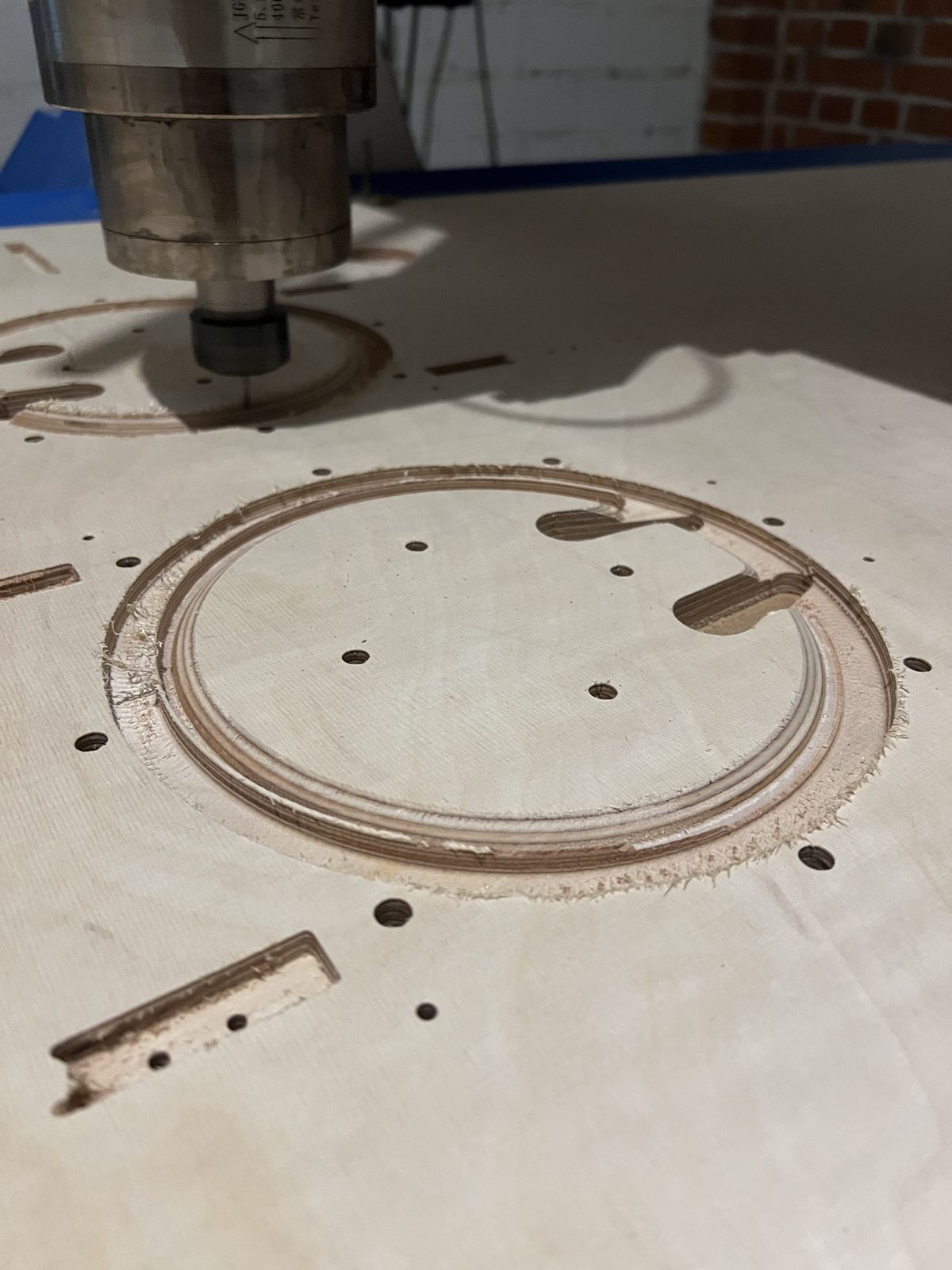
Cutting the Baltic birch on the CNC router 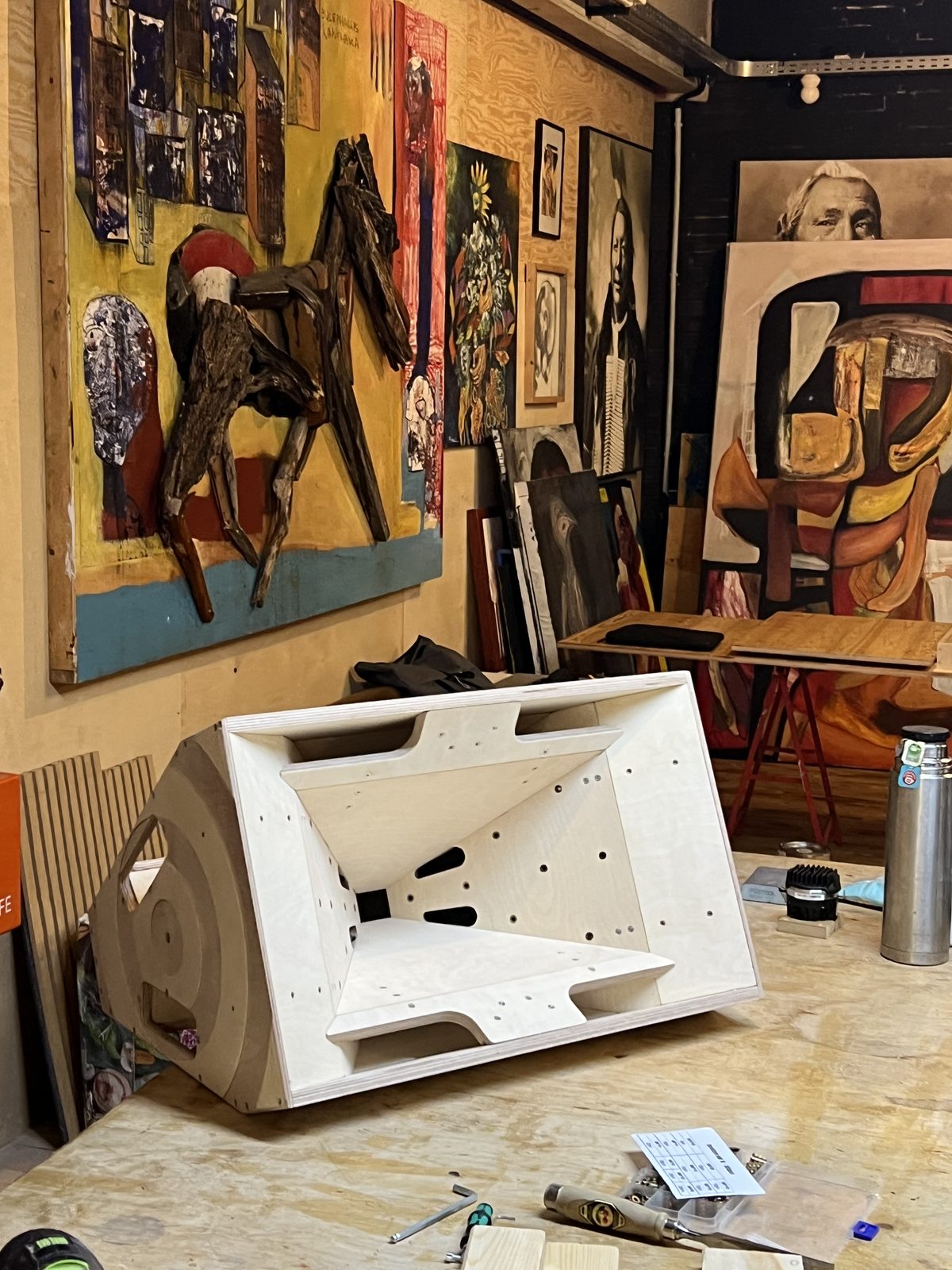
A cabinet glued up, before finishing 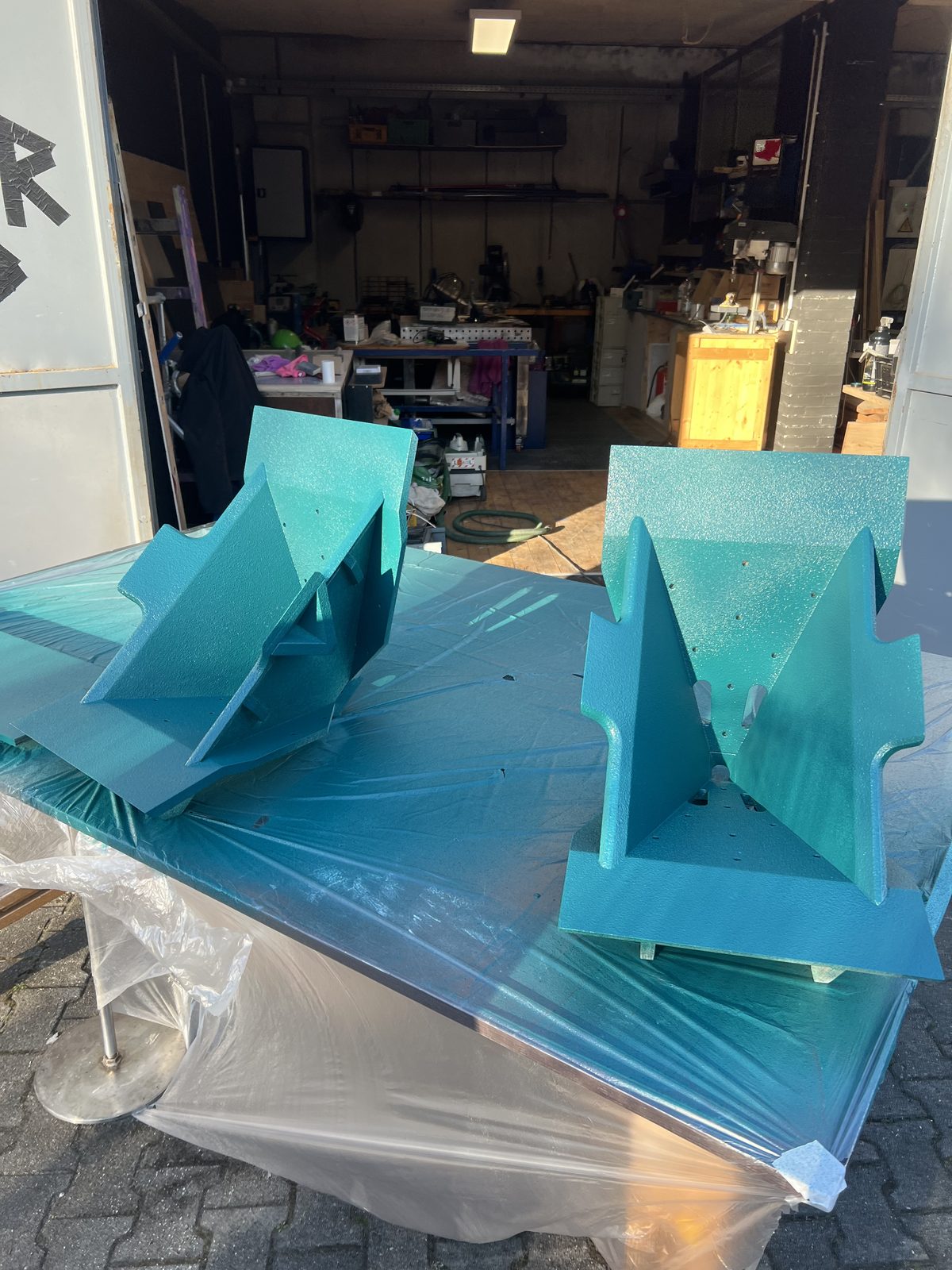
Both cabinets painted, drying 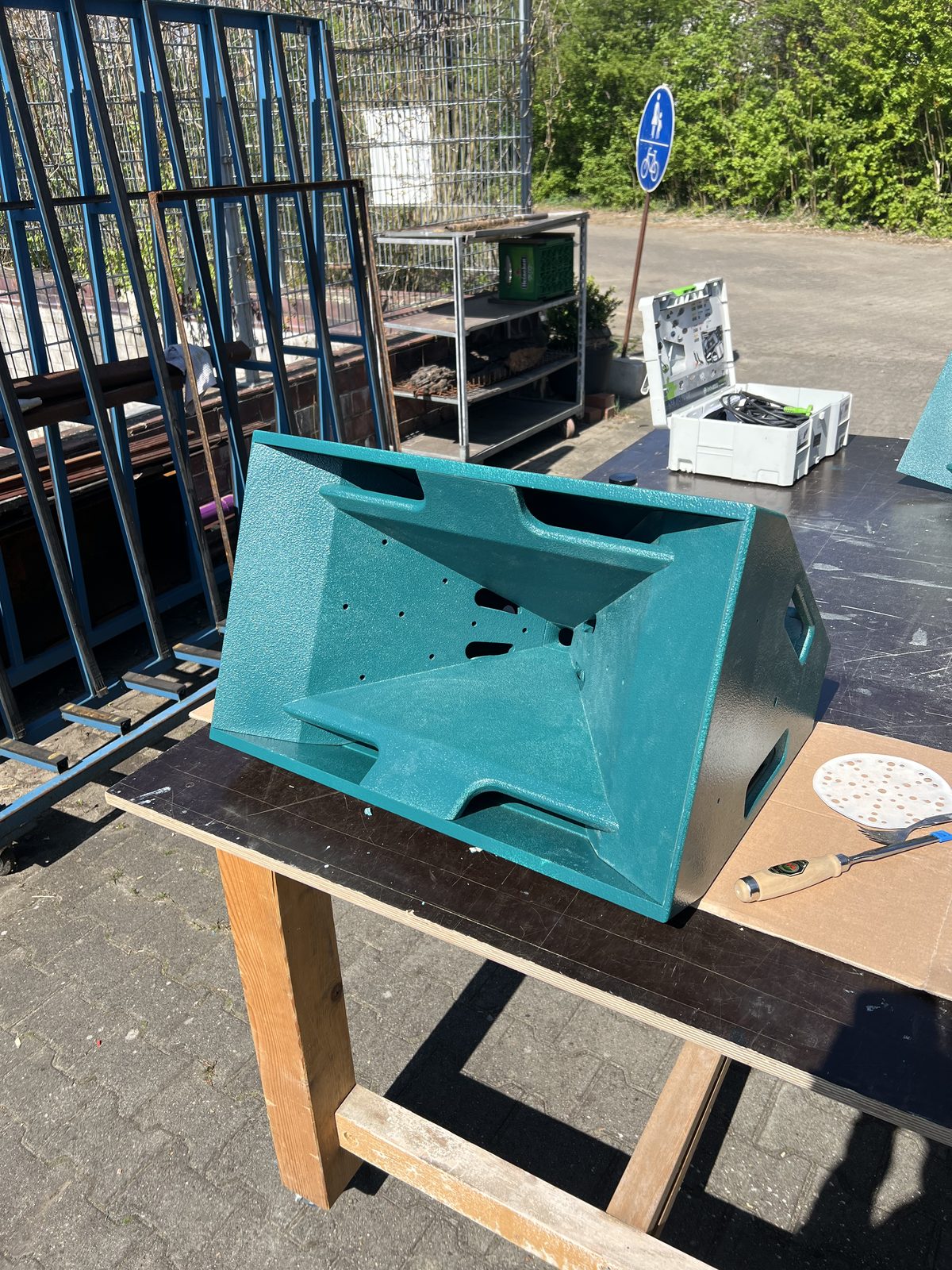
Finished, looking into the horn 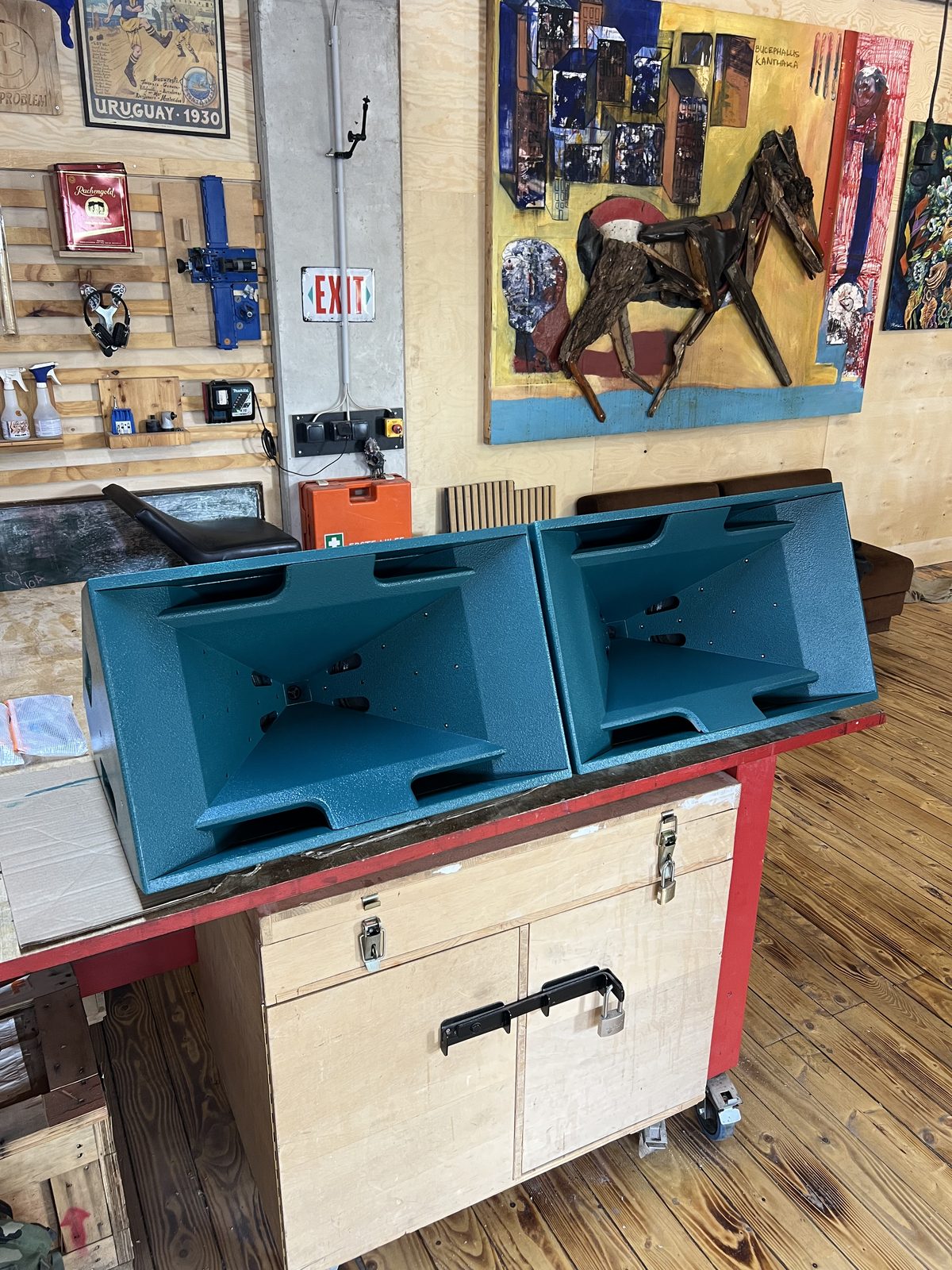
The pair, ready to go to the boat 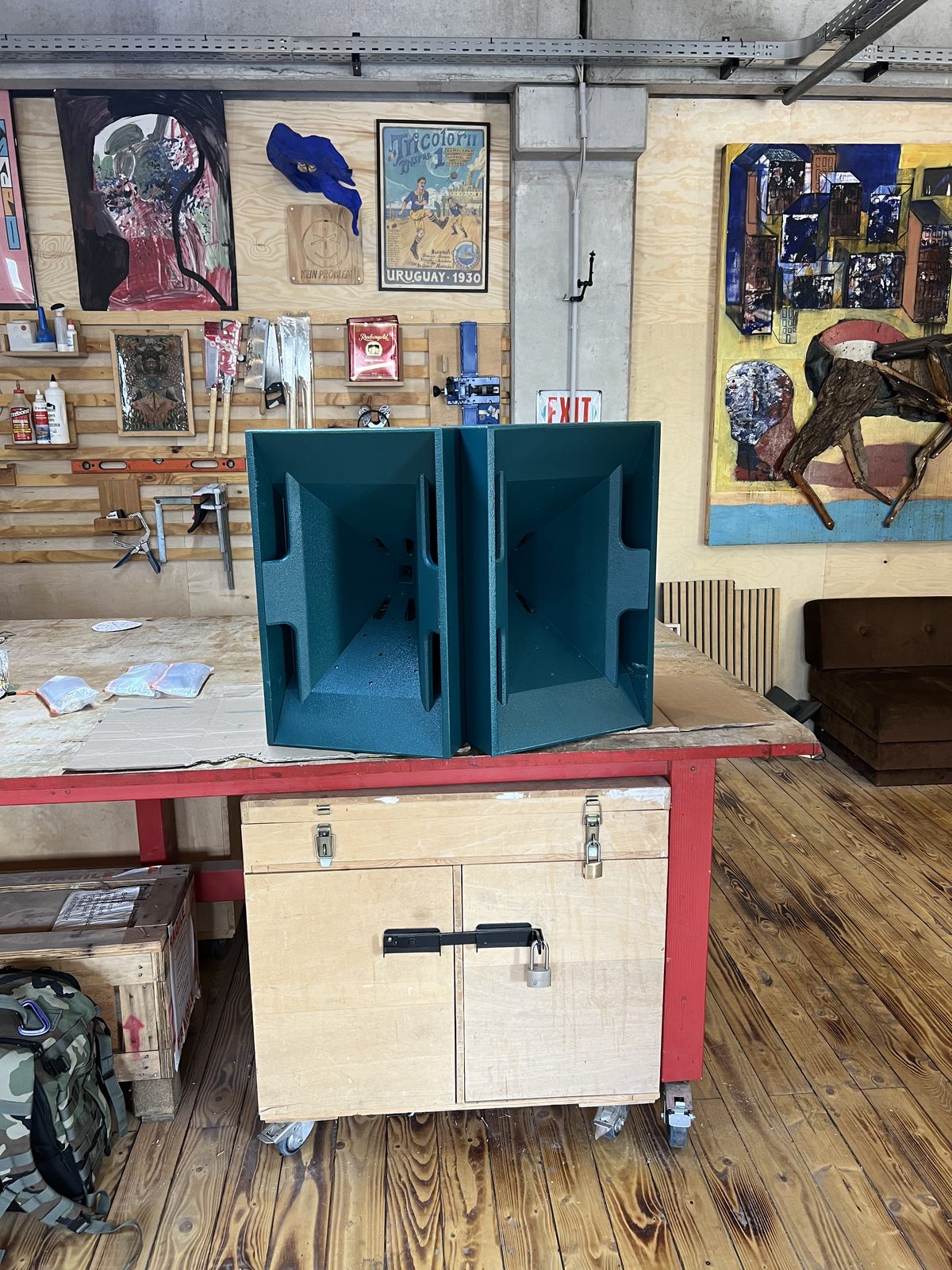
The pair standing upright 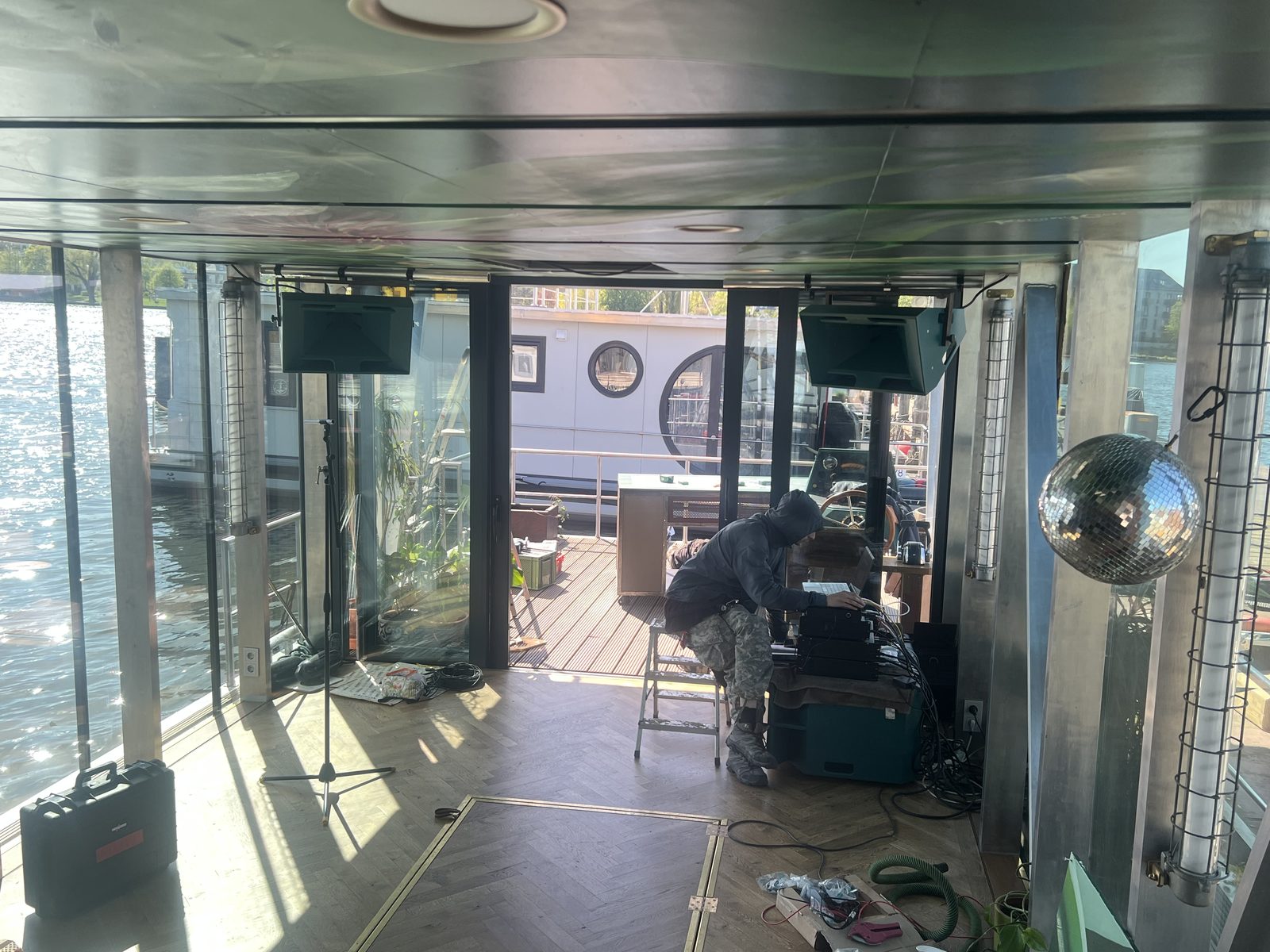
Installed, flown in the corners at one end of the room 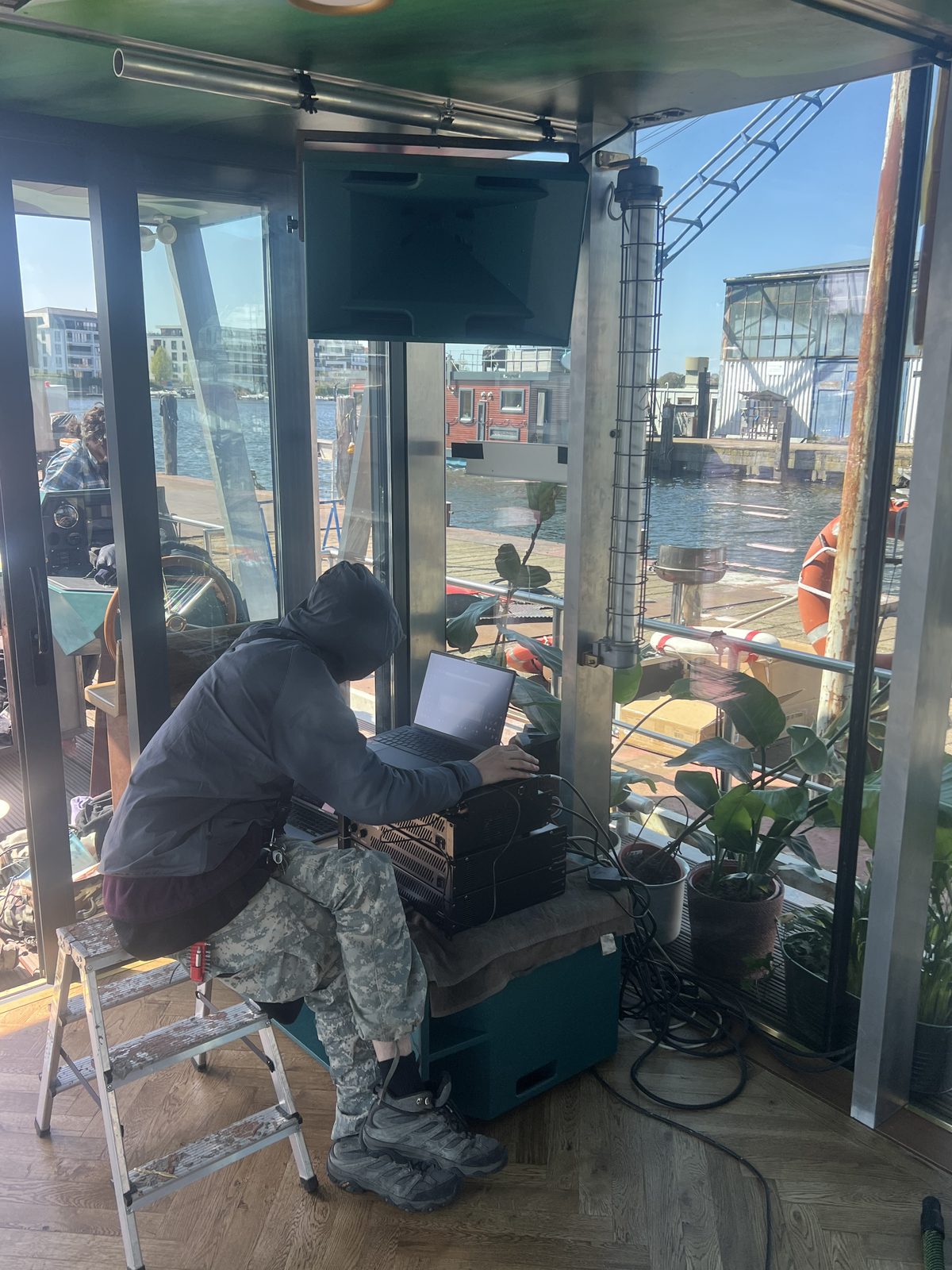
One cabinet up on the ceiling while the system is set up